When I first read about perfectionism, I didn’t think it applied to me. I am pretty easy going, adaptable, and generally don’t get too upset over things. In other words, I don’t need things to be perfect. It turns out, that is not what perfectionism is. Perfectionism, in short, is all or nothing thinking paired with excessive self-criticism and fear of failure that leads to procrastination and avoidance. And this delightful mode of thinking has kept me from doing a lot of creating in my life including something I love to do, which is create art journals!
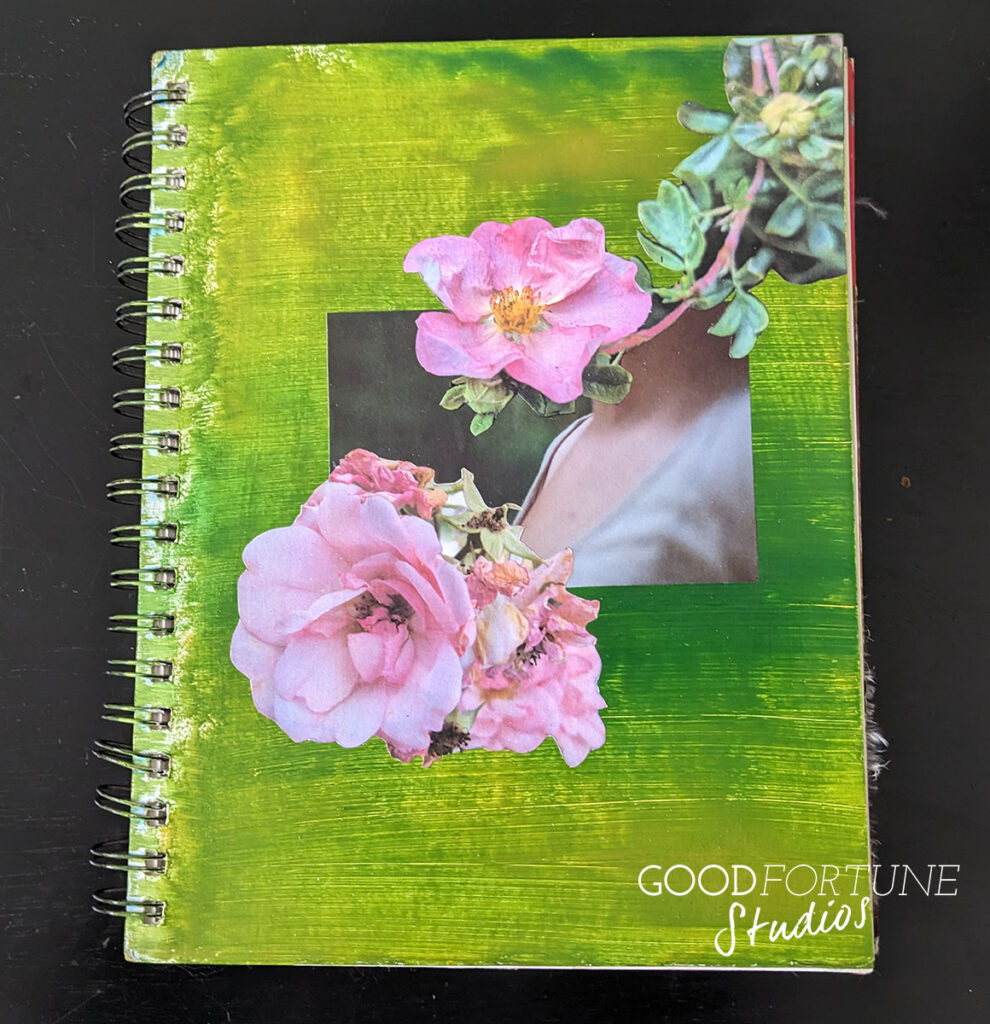
This art journal was started in 2011. 2011- and I just finished it in 2025. 14 years! There have been so many stops and starts, it’s really kind of ridiculous.
A Realization that Caught Me Off Guard
While working on one of the journal pages over that week, I suddenly realized what had held me back: I had this expectation of myself that I would create 60 pages of mind-blowing, deep, perfect art. Who thinks like that?! (Probably a lot of people since there are courses, books, therapy practices, and workshops organized around getting over perfectionism! I’m guessing the people making bank off of this have worked through this already.)
In realizing this, I can understand why it has taken me so long to finish – who wants to work under that kind of pressure? There is good pressure, of course, things like commissions, deadlines, or contests. The kind of pressure that is motivating and pushes you to make better work. But perfectionism? That swings you in the other direction. You end up avoiding the work altogether because if it doesn’t come out exactly the way it is in your head, the first time, you’ve failed.
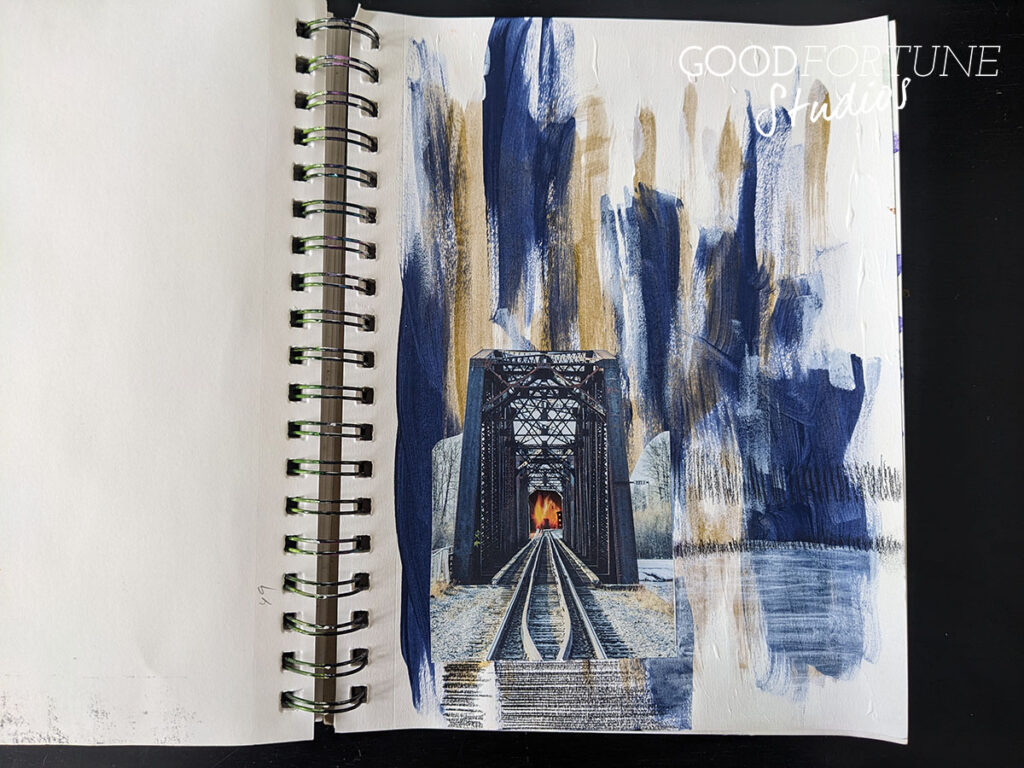
When I think of how much more I could have created and how much better I’d be, it threatens to take me down in a whirlpool of regret. That would not be helpful so, the only thing to do now is move forward, in the here and now!
To wrestle the thought patterns of perfectionism, here are a few of the things that I focus on.
Do you have a rule book?
This is what I call it, there isn’t a real book, at least for me. – maybe someone, somewhere has actually written one for themselves! A rule book is a hidden agenda for yourself you might not even realize you have (I didn’t!). These rules are things our brain sneakily came up and they can keep us from getting something done. We think it’s a good thing because it sounds like we will get the thing done, we’ve just added some parameters to the getting it done. Unfortunately, that’s not always the case. A lot of the time, these rules end up keeping us from getting things done.
These made up rules might be things like:
I have to finish a collage every day or it doesn’t count.
I have to knit 20 rows or it doesn’t count.
I have to make something before work or it doesn’t count.
Notice the all or nothing aspect. It’s either this OR that. This often ends up becoming “since I can’t finish a whole collage today, I won’t do anything at all”. And that one day often leads to skipping a lot more than just one day.
I started out working in a bigger art journal over the weekend because I had more time. When thinking of continuing into the work week, I (thankfully) realized that it would be harder to finish a big page. I decided to work in a smaller journal, which was much more doable but what if I only had 5 or 10 minutes? I wouldn’t be able to finish a collage in that time! Uh oh – there is some of that perfectionism showing up. Really, the goal is to create something and so lower your own expectations. 5 minutes could get you something cut out, something glued, something sketched: something done. All those 5 minute moments of done add up to lots getting done over time as opposed to waiting for the perfect conditions.
Can you make it easier for yourself?
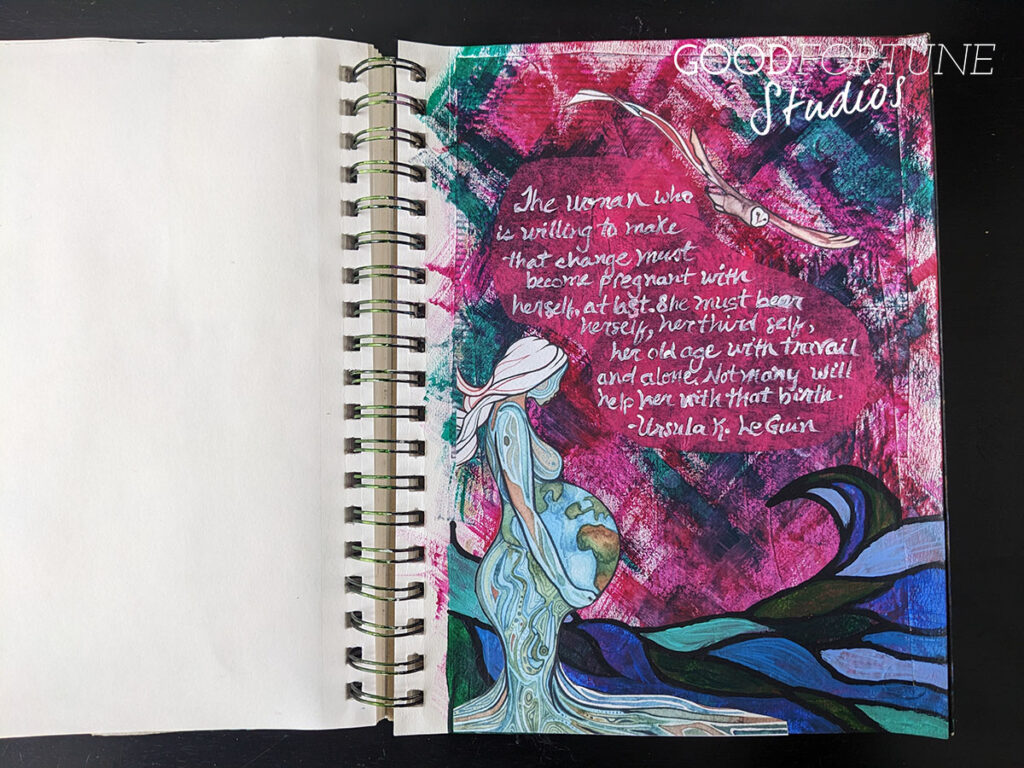
One thing I learned over the years is to head off the blank page or canvas. In the case of my art journal, I actually had done this. During the times when I was working on a painting, I would take the leftover paint from that project and paint another page with it. With this done, I can get inspiration from the paint colors or shapes that are already there. The 11 pages that were left in the journal already had paint on them which made it easier to come up with a collage.
Do it stupid, make something ugly, and embrace the cringe.
I have seen all three of these statements on IG and they have been helpful.
Make something ugly: As in, do the work like no one will see it and there is no consequence. Put colors together that don’t work, use a font you hate but get something on the page.
Do it stupid: the example given was photography. Take a hundred photos, don’t worry about getting the exposure or aperture right or framing it perfectly. You learn by doing, not over-thinking.
Embrace the cringe: accept that some work is just not going to be good because, again, you learn by doing. I created a collage that I did not like but all that mattered in that moment was that I did the work. Nothing serious happened because I made this cringey collage. Honestly? Someone out there may like it and not much else that I do but by making something, I learned what I didn’t like. In that moment, I also defeated that thinking that I needed to create a mind-blowing piece of art every time.
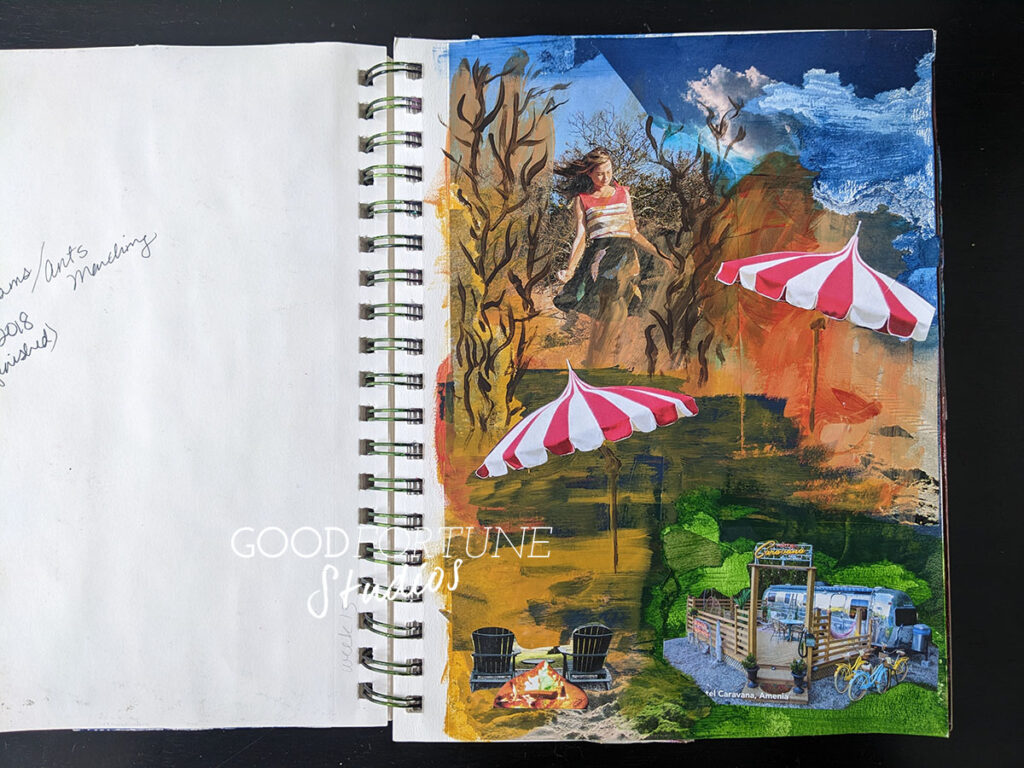
Now that I’ve finished this journal, I need to set my sights on another project. If I wait too long, I’ll probably talk myself out of it. I’d like to believe that this one journal will finally make me move past the crippling perfectionism but you don’t usually get rid of 20 or 30 years of habits in one fell swoop. Doing the work is the only way out of this perfectionism trap. My journal is not perfect but it is done and something is way better than nothing.
Understanding Perfectionism: Traits, Causes, and How to Overcome It
https://attuned-therapy.com/blog/perfectionism-traits-causes-overcoming